Director Martha Phillips looks back at her time in the industry and touches on the fundamental pillars of PR.
One of the things you learn very quickly in PR is that you never really know what the day is going to bring.
You can start the morning planning a social media campaign, preparing for media interviews and signing off creative content and by lunchtime be managing a reputational issue that could make tomorrow’s front pages.
That, in many ways, is the reality of a career in PR: constant change, constant challenge and the need to think calmly and strategically while the world revolves frantically around you.
It’s fast-moving, unpredictable and constantly evolving. But it is also one of the most rewarding industries to work in because, at its heart, PR is about people – understanding audiences, building trust and helping organisations communicate with clarity and confidence.
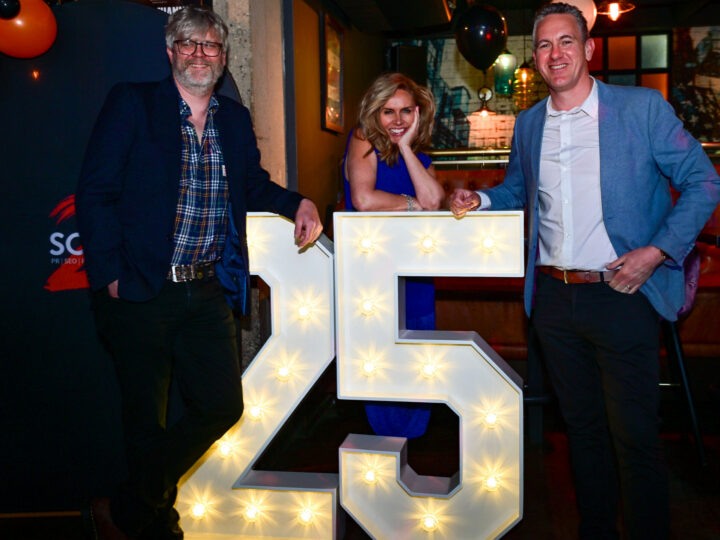
This year, Source celebrates 25 years as one of Leeds’ original independent PR agencies, and it feels like the perfect moment to reflect not only on the agency’s journey, but also on the leadership lessons that come from building reputations, relationships and resilience over two and a half decades.
The communications landscape today looks entirely different to the one that existed 25 years ago.
Back then, PR was heavily focused on traditional media relations, print coverage and press releases. Social media didn’t exist; influencer marketing wasn’t part of the conversation and brands certainly weren’t producing content at the speed they do today.
Now, everyone is effectively their own publisher.
Brands communicate in real time. Reputations can shift overnight. Audiences expect authenticity, transparency and immediate responses. And with AI, digital content and social platforms continuing to evolve, the pace of change shows no sign of slowing.
For any agency to thrive for 25 years in that environment is a huge achievement.
Longevity in PR isn’t about standing still and doing the same thing repeatedly. It’s about adapting, evolving and continuing to understand what clients truly need.
Adaptability is survival.
PR is now a two-way conversation between businesses, people and the audiences. Today, everyone has a voice and the ability to influence opinion, which makes strategy and credibility more important than ever.
Leadership in communications means many things, but key are staying ahead and adapting to change and listening. Strong leaders create space for collaboration, encourage different perspectives and help shape confident decisions in fast-moving situations. I believe the biggest risk in PR is thinking the way you worked five years ago will still work today.
Reputation takes years to build and seconds to damage.
Being prepared is one of the most important parts of staying ahead in a crisis, yet it still amazes me how many businesses, large and small, operate without a crisis communications or action plan in place.
A crisis can come from anywhere: staffing issues, customer experience, a service failure, a product issue or even a single social media post.
No business should ever assume, “It won’t happen to us.”
In a crisis, PR is about clarity, judgement and protecting trust.
Often, the most important work PR professionals do is the work no one ever sees, because the situation has been handled effectively before it escalates and so that it never makes news headlines or trends on social channels.
And reputation management doesn’t just apply to brands. Personal branding and visibility matter more than ever. Leaders and professionals should continue raising their profile through platforms such as LinkedIn and their own communication channels, because trust today is built through visibility, consistency and credibility.
Despite all the changes in communications, one thing has remained constant: relationships are everything. In fact, they probably matter more today than ever before.
PR has always been, and will always be, a relationship business.
Whether it’s building trust with journalists, supporting clients through challenging moments or developing talented teams internally; strong relationships are what create long-term success.
Some of the media contacts and professional relationships we work with today have been built over decades.
That level of trust doesn’t happen overnight.
Good PR professionals build contacts. Great PR professionals build trust.
And in a world where audiences are becoming increasingly sceptical of corporate messaging, trust has never been more valuable.
While campaigns and results are important, one of the things I am most proud of is seeing people grow.
Great agencies are not built purely on client lists or awards. They are built on culture, collaboration and talented people who are given the confidence and support to develop.
One of the most rewarding aspects of leadership is watching someone progress from feeling unsure in the early stages of their career to confidently leading meetings, managing clients and delivering exceptional work.
As leaders, our role is not only to deliver results, but to create environments where people can thrive.
That investment in people is what ultimately strengthens both agency culture and client relationships.
PR isn’t just about communication, it’s about understanding people. Understanding what motivates them, what builds trust and which stories genuinely resonate with audiences.
The PR landscape will continue to evolve. Technology will keep advancing, and media platforms will continue to shift.
But what AI cannot replace is authentic storytelling, strategic thinking, and genuine human relationships. It also won’t replace communications professionals, but it will quickly expose those who lack judgement, strategy and ethical understanding.
As AI becomes increasingly embedded within newsrooms, communications teams and agencies, the gap between content creation and reputation management will only continue to grow.
AI can draft, summarise and scale content at speed. But it cannot read a room, understand cultural nuance, anticipate reputational risk, or make ethical judgement calls in moments of crisis.
That is where PR remains irreplaceable.
According to the Edelman Trust Barometer, trust is increasingly driven not by the volume of messaging, but by authenticity, transparency and accountability and these are all areas where human insight matters more than speed.
The strongest brands of the future will not be the ones producing the most AI-generated content, but the ones using AI as a support tool while doubling down on strategic thinking, senior counsel and emotional intelligence.
AI will raise the baseline, but it will also raise expectations.
And that is where experienced PR professionals will continue to prove their value.
After 25 years, one thing is clear: PR will continue to evolve, but the fundamentals of great communications remain the same:
Reputation still takes years to build and seconds to lose and great PR is about protecting it every single day.
If Source has proven anything over the last 25 years, it’s that when you combine strategic thinking, trusted relationships and great people, you don’t just build successful campaigns, you build reputations that last. And that is something truly worth celebrating.

Martha Phillips – Director
With over two decades of experience in PR, communications, marketing and brand strategy, Martha is an accomplished communications professional and business leader. As Director at Source Marketing Communications, she leads the development and delivery of integrated marketing, PR, digital and social media strategies for a diverse portfolio of clients across both consumer and B2B sectors. Alongside client delivery, she plays a pivotal role in business development, operations and new business strategy for the agency. Beyond her professional work, Martha is also a Scouts Leader, a long-standing committee member of Firecracker Ball – which has raised over £3.6 million for Barnardo’s in Yorkshire – and a Business Ambassador for the Young Enterprise Network, supporting the next generation of entrepreneurs.