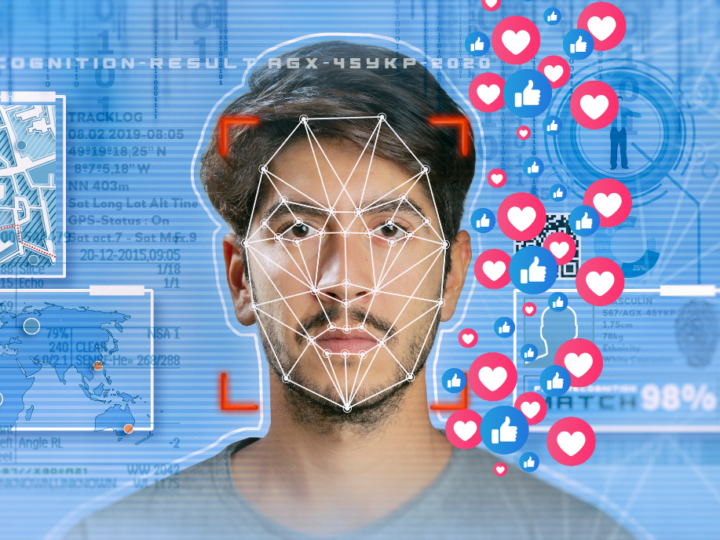
Account Director Lewis Scott explores how a social media ban for under 16’s is a positive move, but must be backed by digital identity.
The UK Government’s announcement that social media platforms could be banned for under 16s is one of the most significant interventions in online safety we’ve seen in a generation. In fact, as a 29-year-old working in the marketing industry, it’s certainly the biggest change I’ve seen during my career, if not my life.
Prime Minister Keir Starmer described the move as:
“A response to growing concerns around children’s mental health, cyberbullying and exposure to harmful online content.”
Personally, I welcome it.
For years, parents, teachers and safeguarding professionals have raised concerns about the impact unrestricted social media access can have on young people. While technology has created incredible opportunities for learning, creativity and connection, it has also exposed children to risks that previous generations simply didn’t face.
Recent tragedies, such as the death of 14-year-old Jools Sweeney after participating in a TikTok challenge, serve as a stark reminder that these concerns are not theoretical.
The real question isn’t whether the policy is right in principle. It’s whether it can actually be enforced.
The UK isn’t the first country to try this approach.
Australia introduced similar restrictions on under-16s accessing social media but concerns quickly emerged around how easy the system was to bypass. Unsurprisingly, a generation that has grown up with technology found ways around the controls.
That’s the challenge.
If age verification relies on self-declaration or checks that can be easily manipulated, the restriction becomes more of an inconvenience than a safeguard.
Social media bans are only as effective as the systems used to enforce them.
If we genuinely want to protect children online, we need a reliable way of proving age without compromising privacy. That’s where digital identity comes in.
For years, digital identity has been discussed as something for the future. In reality, it’s already becoming essential. Banking, healthcare, education and government services increasingly rely on trusted digital verification. Social media should be no different.
Without robust identity infrastructure, platforms are left trying to estimate age through behavioural signals, facial analysis, uploaded documents or self-certification. None of these approaches are perfect, and all leave room for inconsistency.
A privacy-first digital identity framework could allow someone to prove they meet an age requirement without sharing unnecessary personal information.
In simple terms, the platform only needs to know that you’re old enough. Not who you are.
This proposal presents an opportunity to tackle two challenges at once: protecting children online while accelerating the UK’s digital identity capabilities.
The conversation shouldn’t stop at banning under 16s from social media. It should focus on how we build safer and more trusted digital environments for everyone.
Done correctly, digital identity could reduce online harm, improve accountability, strengthen cybersecurity and give individuals greater control over their personal information.
The proposed legislation is a welcome step forward, but it should be viewed as the start of the journey rather than the destination.
If the UK wants this policy to succeed where others have struggled, robust digital identity and age assurance must be part of the solution.
Protecting children online is a responsibility we all share. The question is whether we’re prepared to build the digital foundations needed to make that protection meaningful.
I personally believe the future of online safety depends on more than regulation alone. Creating a safer digital environment will require trusted identity frameworks that balance security, privacy and accountability. While the proposed legislation is a positive step, its long-term success will depend on the digital foundations that support it.

Lewis Scott – Account Director
Lewis Scott is the Account Director at Source. He has been part of Source for over seven years, with a three-year break to successfully run his own cheesecake company. Returning to Source in August 2023, he has progressed from Account Executive to his current role. Lewis works primarily with B2B clients, delivering expertise across PR, social media, graphic design, website management, and media buying. His blend of creativity, entrepreneurial experience, and strategic insight helps clients tell their stories effectively and achieve measurable impact.